

Easy Plant Care: A Beginner's Guide to Happy Indoor Plants
Table of Contents
- What You'll Need for Easy Plant Care
- Choosing Low Maintenance Indoor Plants
- An Indoor Plant Watering Schedule That Works
- How to Fertilise Indoor Plants Without the Fuss
- Beginner Plant Repotting Tips
- Common Mistakes That Make Easy Plant Care Hard
- Conclusion
- Frequently Asked Questions
Last Updated: 11 September 2026
What You'll Need for Easy Plant Care
Easy plant care starts with four basics: the right plant for your light, a pot with drainage holes, a simple watering routine, and a good-quality potting mix. Get those right and most indoor plants will look after themselves.
Here's what actually earns its place on your shelf:
- A small watering can with a narrow spout so you can water around the base of the plant rather than over the leaves
- A pot with at least one drainage hole, plus a saucer or cachepot to catch runoff
- Free-draining potting mix suited to indoor plants, not garden soil dug from outside
- A cheap moisture meter or a wooden skewer to check soil before watering
- A pair of clean snips for dead leaves and spent stems
That's the whole kit. Everything else is optional.
Choosing Low Maintenance Indoor Plants
The best low maintenance indoor plants are those that tolerate inconsistent watering and moderate light: pothos, snake plants, ZZ plants, spider plants and philodendrons top most beginners' lists.
Match the plant to your actual conditions, not the ones you wish you had. A dark north-facing flat will kill a succulent that wants full sun, no matter how carefully you water it. The Royal Horticultural Society's houseplant guidance makes the same point: light levels decide what survives long before watering technique does.
A quick way to choose:
- Bright, direct light: succulents, cacti, some hoya varieties
- Bright but indirect: monstera, fiddle-leaf fig, most philodendrons
- Low light: snake plant, ZZ plant, pothos, cast iron plant
If you're a serial plant killer, start with three or four of the toughest varieties rather than one fussy statement plant. Roots & Shoots stocks beginner-friendly favourites alongside rarer varieties, so you can start easy and add trickier plants once your confidence grows.
An Indoor Plant Watering Schedule That Works
An indoor plant watering schedule works best as a check, not a calendar. Water when the top few centimetres of soil are dry, which in most homes means roughly every 7-14 days in warmer months and less often in winter (rhs.org.uk).
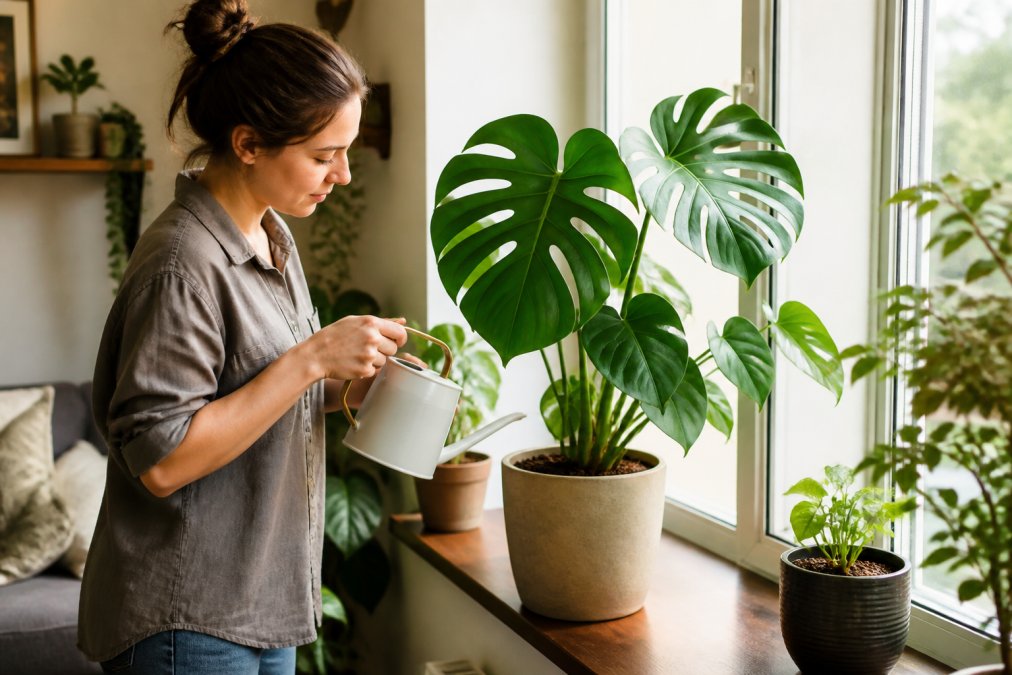
Most beginners kill plants with kindness rather than neglect. Overwatering suffocates roots and causes the yellowing and mushy stems that people often mistake for underwatering.
A workable routine:
- Check soil moisture with a meter or skewer every few days
- Water thoroughly until it runs from the drainage hole
- Empty the saucer so roots never sit in water
- Reduce frequency in winter when growth slows
Plants in smaller pots dry out faster than large ones, and a warm room speeds evaporation. Adjust to your home rather than following a fixed rule.
How to Fertilise Indoor Plants Without the Fuss
Fertilise indoor plants lightly during the growing season, usually spring through early autumn, and skip it in winter when most plants are resting. A balanced liquid fertiliser diluted to half strength, applied roughly monthly, covers most indoor plants (rhs.org.uk).
The mistake is feeding a struggling plant. Fertiliser is not medicine; if a plant is yellowing from overwatering, more feed makes it worse. Fix the underlying problem first.
Join our plant party and subscribe →
A few practical rules:
- Dilute more than the label suggests for sensitive plants like ferns
- Feed after watering, never into dry soil, to avoid burning roots
- Pause feeding for newly repotted plants for about six weeks
Roots & Shoots carries a range of fertilisers and soil additives, so you can pick up feed and mix in the same order as your plants rather than making a separate trip.
Beginner Plant Repotting Tips
Repot when roots circle the drainage hole, growth stalls, or water runs straight through the pot. For most indoor plants that's every 12-18 months, and spring is the safest time to do it.
Choose a pot only 2-3cm wider than the current one. A pot that's far too large holds excess wet soil around the roots and invites rot.
The process is straightforward:
- Water the plant a day before to loosen the root ball
- Gently tease out circling roots with your fingers
- Add fresh potting mix to the new pot, then set the plant at the same depth it sat before
- Fill around the sides, firm lightly, and water well
- Keep the plant out of direct sun for a week while it settles
Common Mistakes That Make Easy Plant Care Hard
Easy plant care becomes hard when beginners water on a fixed schedule, skip drainage, or move a plant every few days to chase better light. Consistency in one good spot beats constant fussing.
Mistake |
What it causes |
The fix |
|---|---|---|
Watering on a set day |
Root rot, yellow leaves |
Check soil first, water only when dry |
Pots without drainage |
Soggy roots, fungal issues |
Always use a pot with holes |
Moving plants constantly |
Stress, dropped leaves |
Pick one suitable spot and leave it |
Feeding a sick plant |
Worsened decline |
Diagnose first, feed only healthy growth |
If your plant is declining, change one thing at a time and give it a fortnight to respond. Beginners often change soil, light, and water all at once, which makes it impossible to tell what helped.
Conclusion
The hardest part of easy plant care isn't the plants, it's resisting the urge to do too much. Start with tough varieties, water only when the soil tells you to, and let the plant settle.
If you'd rather skip the trial and error, Roots & Shoots delivers beginner-friendly favourites and rare varieties straight to your door, along with the fertilisers and soil additives to keep them thriving. Grow your space and grow your calm, one leaf at a time. Join our plant party and subscribe to get started.
Frequently Asked Questions
What are the best indoor plants for beginners?
Start with forgiving varieties like pothos, snake plants, ZZ plants, and peace lilies. These tolerate missed waterings and lower light, which makes them ideal for low maintenance indoor plants. Choose one that suits your light levels: snake plants handle dim corners, while pothos prefers bright, indirect light. Buy from a reputable supplier that delivers healthy plants to your door, and you will have a much easier start than rescuing a struggling supermarket specimen.
How often should I water my indoor plants?
Most indoor plants prefer watering every 7 to 10 days in warmer months and less often in winter, but the right indoor plant watering schedule depends on the plant, pot size, and room conditions. Check the top 2-3 cm of soil with your finger; water only when it feels dry. Overwatering kills more houseplants than underwatering, so when in doubt, wait a day or two longer.
How do I know if my plant needs repotting?
Signs include roots growing out of the drainage holes, water running straight through the pot, slowed growth, or the plant looking top-heavy. For beginner plant repotting tips, choose a pot only 2-3 cm wider than the current one, use fresh potting mix, and repot in spring or early summer when the plant is actively growing. Tease out circling roots gently and water well after repotting.
What is the best fertiliser for indoor plants?
A balanced liquid fertiliser diluted to half strength works well for most indoor plants. Feed every 4-6 weeks during spring and summer, then pause in winter when growth slows. If you are unsure how to fertilise indoor plants without burning them, always water the soil first and apply the diluted feed afterwards. Slow-release granules are another easy option for forgetful feeders.